
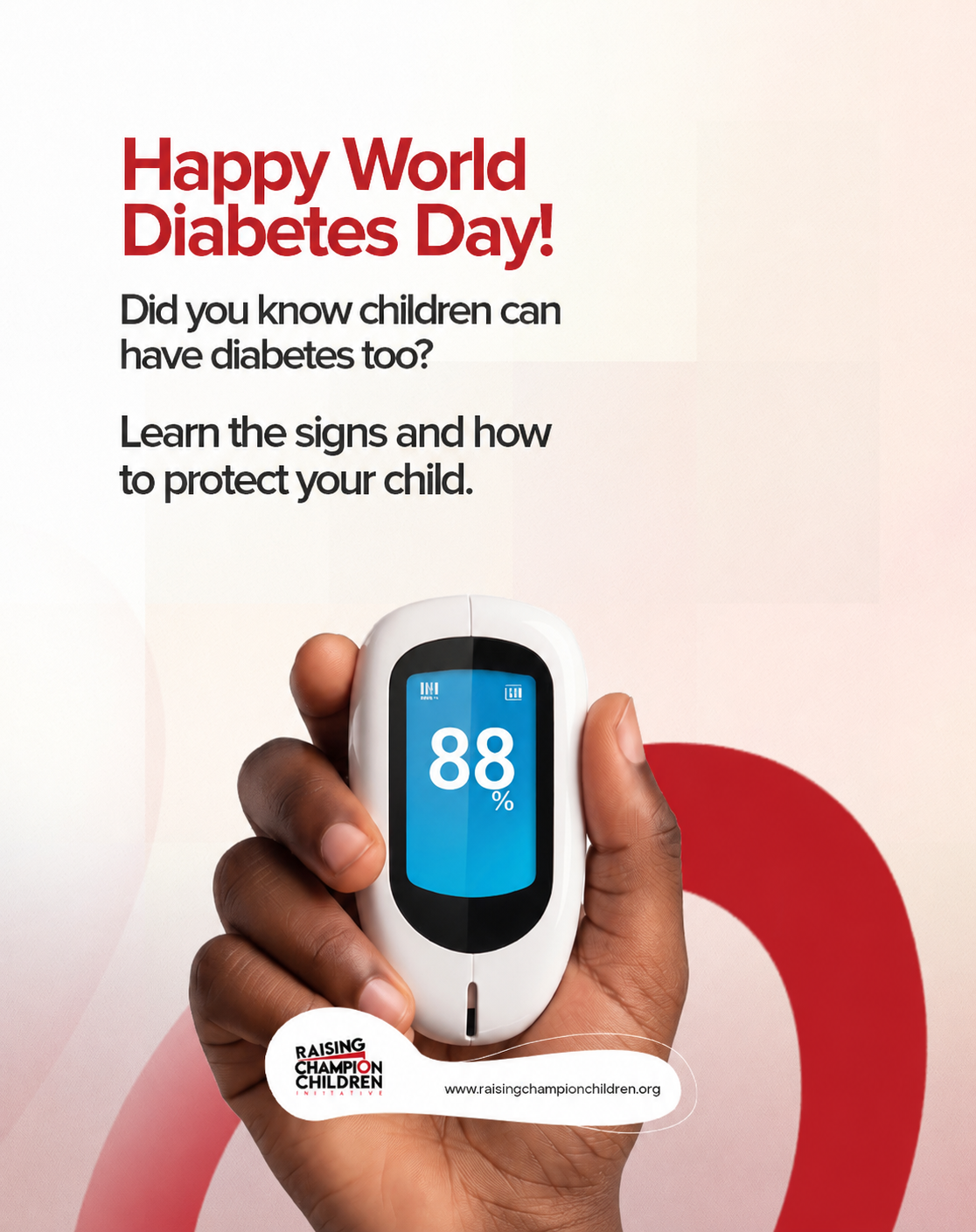
Many parents think diabetes only affects adults, but children can get it too. Knowing the early signs in a child can protect their health and even save their life.
Every year on November 14, the world marks World Diabetes Day. For most people, the day brings to mind older relatives who watch what they eat. But diabetes does not wait for adulthood. Children and teenagers can live with it, and in many homes, the signs are missed or mistaken for something else. This article explains what diabetes is, what to look out for in a child, and what you can do about it, in simple words.
What is diabetes?
When we eat, our body turns the food into a kind of sugar called glucose. Glucose is the fuel that gives us energy. To move that sugar from the blood into the body’s cells, the body needs a helper called insulin.
In a person with diabetes, this system does not work properly. Either the body does not make enough insulin, or it cannot use insulin well. The sugar then stays in the blood instead of going where it is needed. Over time, too much sugar in the blood can harm the eyes, kidneys, nerves and heart.
The two types parents should know about
- Type 1 diabetes.
This is the type most often found in children. It happens when the body’s own defense system mistakenly attacks the part of the body that makes insulin. A child with Type 1 needs insulin every day to stay well. It is not caused by eating too much sugar, by something the parents did, or by a spell or curse. It cannot be prevented, and it cannot be caught from another child.
- Type 2 diabetes.
This type used to be seen mostly in adults, but it is now found in more young people too. It is linked to being overweight, not being active, and having family members with diabetes. This is the type that healthy habits can help to prevent or delay.
Warning signs in a child
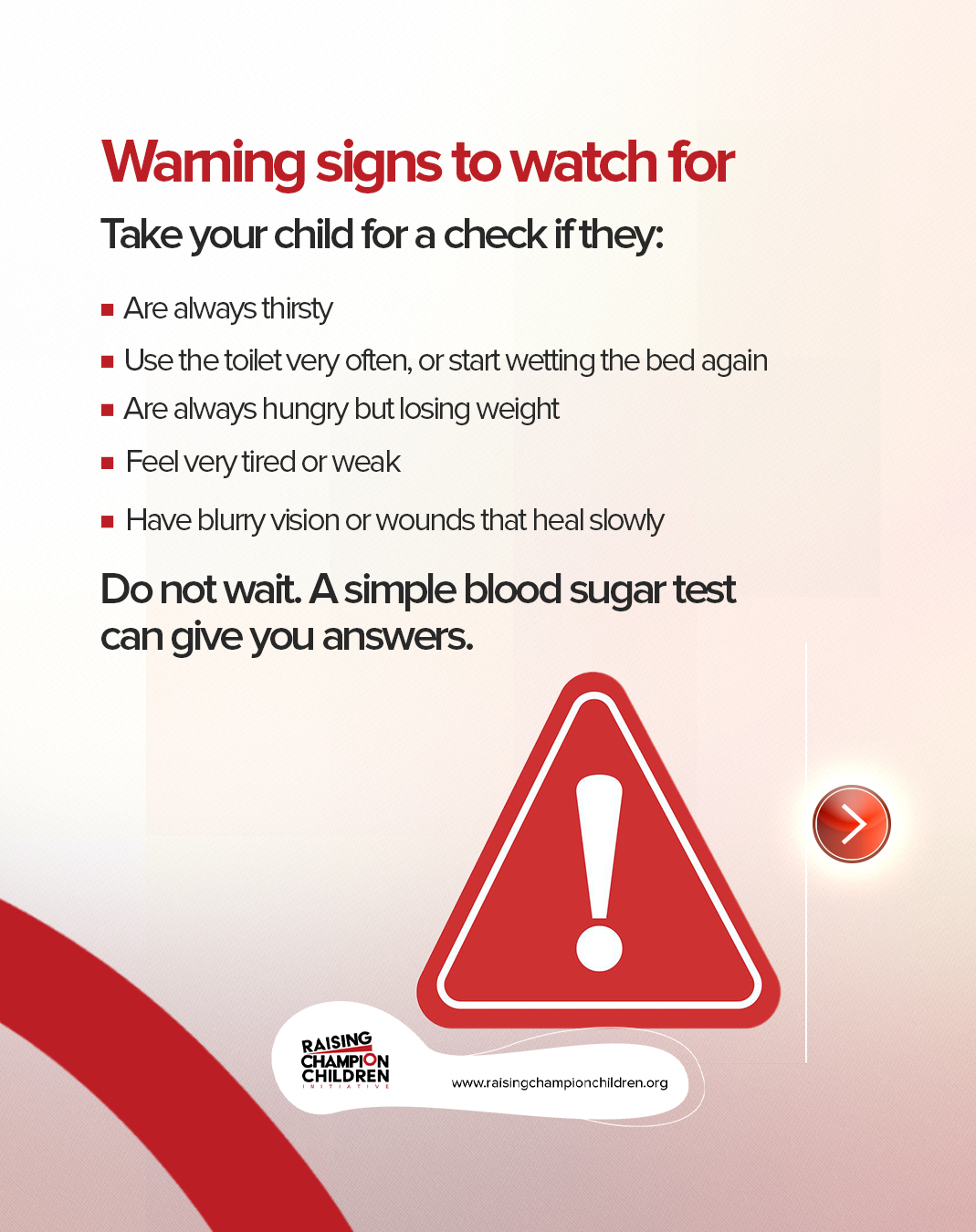
The early signs are easy to overlook, because they can look like normal childhood tiredness or a growth spurt. Watch out for a child who:
- Is thirsty all the time and drinks a lot of water
- Goes to the toilet very often, or starts wetting the bed after having stopped
- Is always hungry but is losing weight
- Is tired, weak, or unusually moody
- Has blurry vision
- Has cuts or sores that heal slowly
- Has a sweet, fruity smell on the breath
If a child has these signs, do not wait to see if they go away. A simple blood sugar test at a clinic or hospital can give answers within minutes.
An emergency you should never ignore
Sometimes, when diabetes has gone unnoticed, a child can become suddenly very sick. Signs include vomiting, stomach pain, fast or deep breathing, a fruity smell on the breath, great sleepiness, or confusion. This is a medical emergency. Take the child to the nearest hospital immediately. Do not try local remedies or wait until morning.
Can diabetes in children be prevented?
This is where honesty matters. Type 1 diabetes cannot be prevented, so a parent should never feel guilty if their child has it. What matters is finding it early and treating it properly.
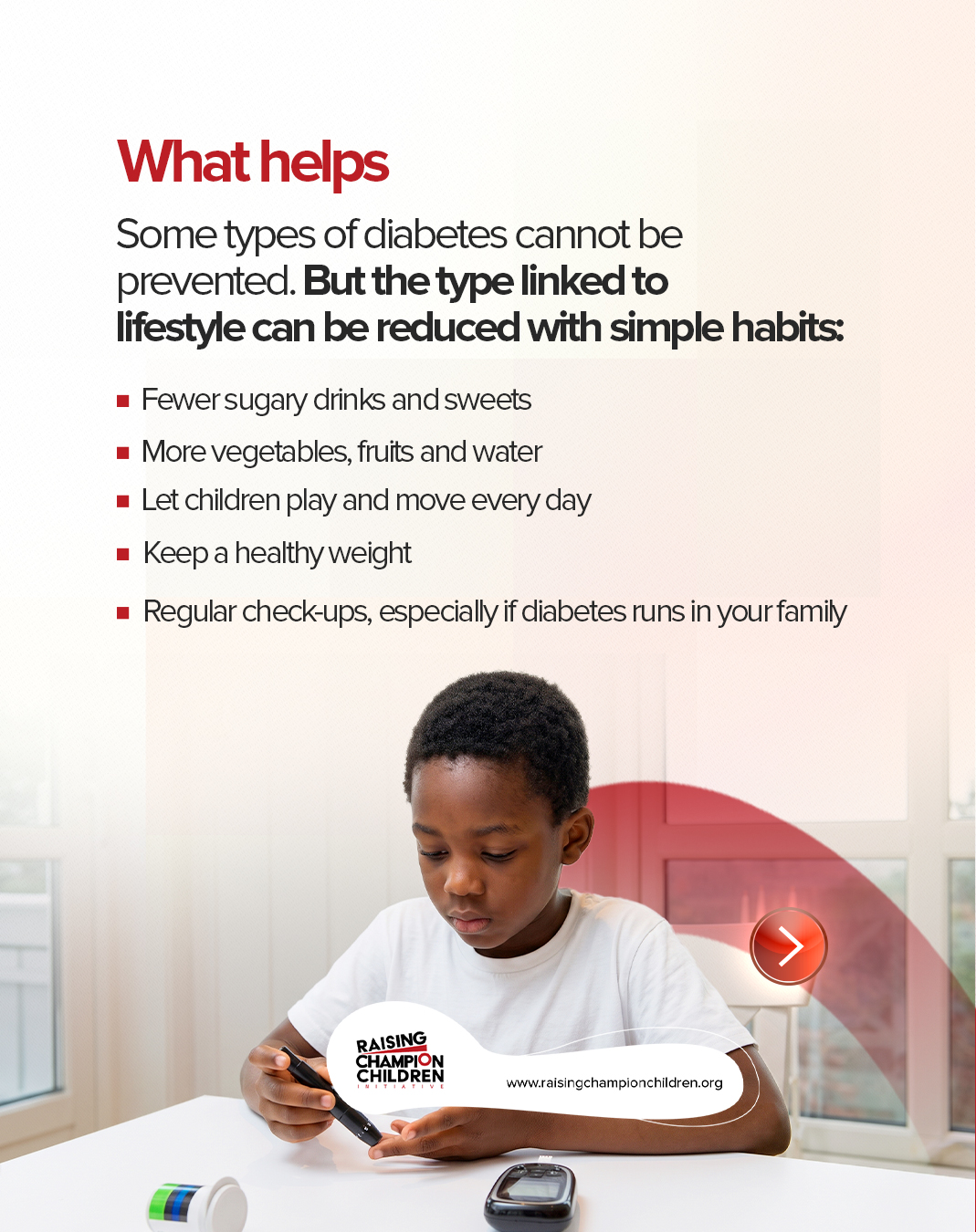
Type 2 diabetes, however, can often be delayed or avoided with healthy habits. These do not need to be expensive or complicated:
- Cut down on sugary drinks. Soft drinks, packaged juice and sweets add a lot of sugar. Water is best.
- Add more vegetables, fruits and whole foods. Beans, vegetables, fruits and unrefined grains fill the stomach and are better for blood sugar.
- Keep children active. Running, football, skipping, dancing and walking to school all count. Aim for some play every day.
- Limit long hours of screen time. Hours of sitting reduce activity and can lead to weight gain.
- Keep a healthy weight. The goal is health, not shaming a child about their body.
- Check your family history. If diabetes runs in your family, mention this to your child’s doctor so they can watch more closely.
Living well with diabetes
A diagnosis can feel frightening, but a child with diabetes can still go to school, play, make friends and chase their dreams. With the right treatment, regular check-ups, and a family that understands, they can live a full life.
Parents and teachers play a big part. Learn how to recognise low and high blood sugar. Make sure the school knows about the child’s condition. Support the child with kindness, and never treat them as weak or different.
It also helps to remove the myths. Diabetes is not a punishment. It is not witchcraft. And it is not something a child can “outgrow” without treatment. It is a health condition, and it deserves proper medical care.
Where RCCI comes in
At Raising Champion Children Initiative, we believe a healthy child is a child who can learn, play and dream. A child who is sick and undiagnosed often falls behind in school, simply because no one understood what was wrong. Awareness is one of the simplest ways to protect children, and it costs nothing to share.
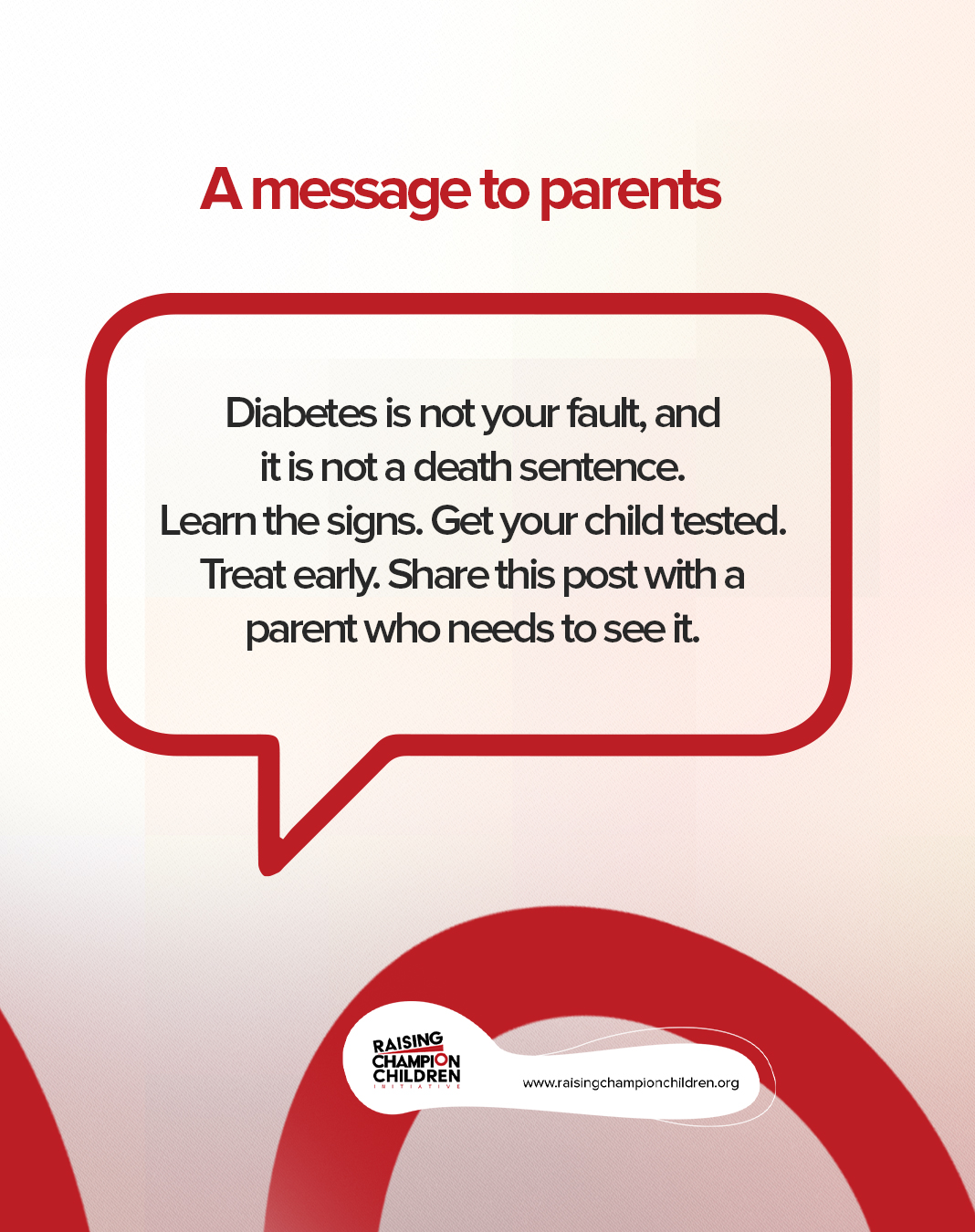
This World Diabetes Day, here is one small thing you can do: tell one parent, one teacher or one neighbor that children can get diabetes too. And if a child in your home shows any of the signs above, get them tested. Early action can make all the difference.
HAPPY WORLD DIABETES DAY