
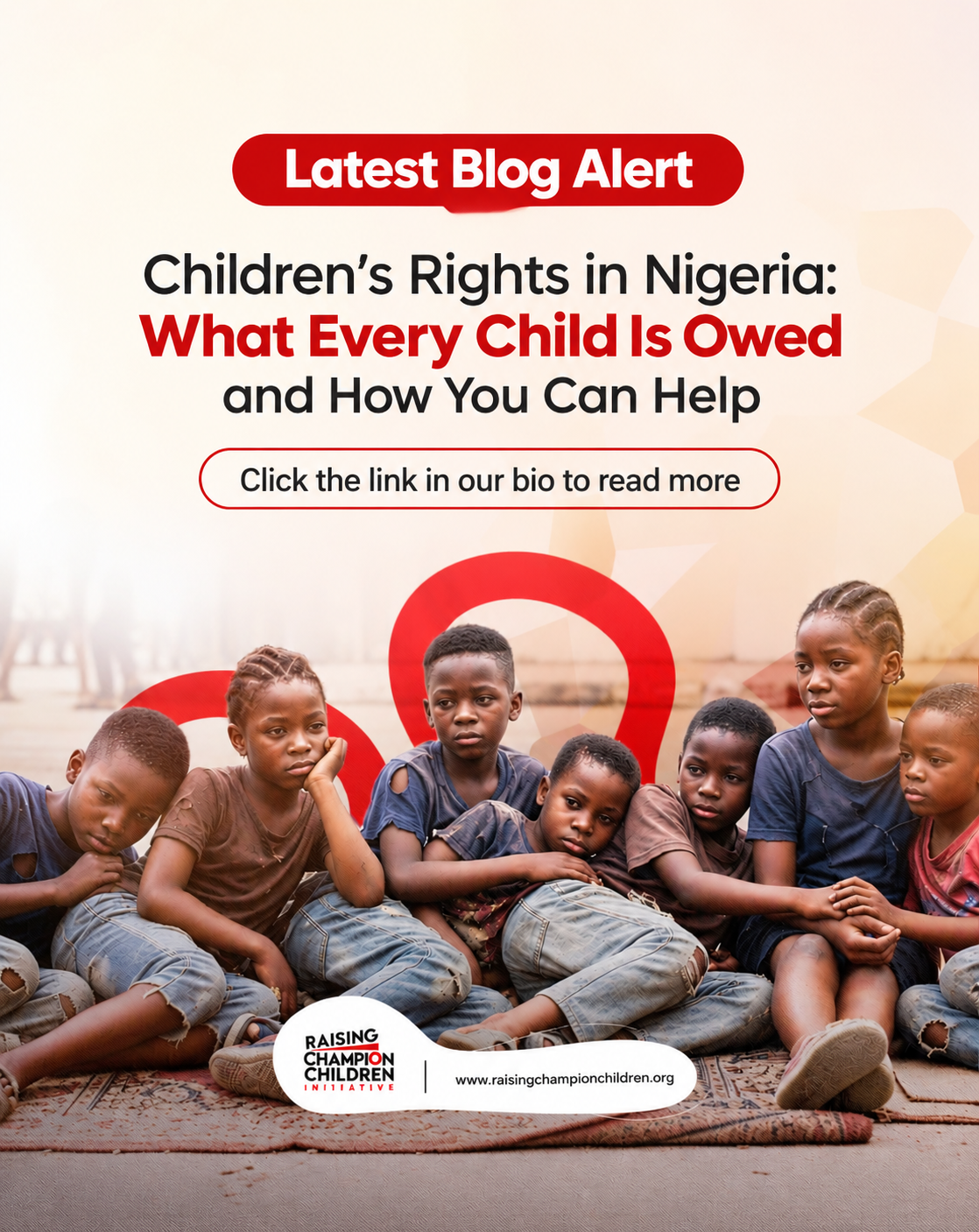
 Every child in Nigeria has rights, like the right to learn, to stay safe, and to grow up healthy. Yet millions still go without them, and ordinary people can help change that.
If you have ever seen a child hawking on the road during school hours, or a girl who was pulled out of class because her family could not afford fees, you have seen what it looks like when those rights are missed. This is not about blaming anyone. It is about understanding what children are owed, so that we can all do our small part.
What are children’s rights, in simple words?
Children’s rights are the basic things every child should have, simply because they are a child. Nobody has to earn them. In 1989, world leaders agreed on a list of these rights in a document called the Convention on the Rights of the Child. Nigeria later added its own law, the Child’s Rights Act of 2003, to protect children here at home.
You do not need to read a long legal document to understand them. They boil down to a few simple ideas:
- The right to learn. Every child should be able to go to school.
- The right to be safe. No child should be beaten, abused, forced to work, or married off early.
- The right to good health. Children should have food, clean water, and access to a clinic or hospital.
- The right to a name and a family. Every child should be registered at birth and cared for.
- The right to be heard. Children have opinions, and adults should listen to them.
World Children’s Day, marked every year on November 20, exists to remind us of exactly these things.
Where Nigeria still has work to do
The biggest gap is education. According to UNICEF, more than 10 million children of primary school age in Nigeria are out of school, and some reports put the number for all school ages even higher. The figures differ depending on who counts and how, but the message is the same: far too many children are missing out.
Even for children who do go to school, learning is not guaranteed. UNICEF has reported that only about one in four Nigerian children in school can read well and do basic maths by the age of 14. Many sit in a classroom for years but leave without the skills they need.
Girls often carry an extra burden. In some families, when money is tight, the boy’s school fees are paid first and the girl stays home. Others are married off too young. A girl who loses her place in school often loses much more than that.
Why do so many children miss out?
There is rarely one simple reason. Usually it is a mix of things:
- Poverty. School fees, uniforms, books, and transport add up. For a family struggling to eat, school can feel like a luxury.
- Distance and safety. In some communities, the nearest school is far away, or the journey is not safe.
- Child labour. Some children are sent to hawk, farm, or help at home so the family can earn a little more.
- Early marriage. This ends education for many girls.
- Lack of awareness. Some parents never had the chance to study themselves, and do not see how much school can change their child’s life.
Most parents love their children and want better for them. The problem is usually not a lack of love. It is a lack of support.
Why protecting a child’s rights helps everyone
When a child gets to stay in school, the benefits do not stop with that one child. An educated child is more likely to earn a decent living later. A girl who finishes school is more likely to marry later, have healthier children, and send her own children to school. A safe, healthy child grows into an adult who can contribute to the community.
In other words, protecting children is not charity. It is the most practical way to build a stronger Nigeria. Every child who is kept in school is one more doctor, teacher, driver, trader, or leader in the making.
What you can do, even if you are not rich
A lot of people think helping children means giving a large amount of money. It does not have to. Here are some simple things anyone can do:
- Speak up. If you hear someone say a girl does not need school, politely disagree. Words can change minds.
- Support a child’s schooling. Even a small amount towards fees, a bag, or books can keep a child in class for another term.
- Watch out for children around you. If a child in your street, church, or mosque has stopped going to school, ask why. Sometimes a small bit of help is all that is needed.
- Listen to children. Ask them what they dream about. A child who feels heard grows in confidence.
- Support groups that work with children. Organizations like Raising Champion Children Initiative (RCCI) work to keep children in school and speak up for their rights. Sharing their work, volunteering, or donating all help.
How RCCI helps
At RCCI, we believe every child has the potential to become a champion. They only need someone to show up for them. That is why we help children stay in school, give them what they need to learn, and speak up for their safety and rights. Whether it is a school bag for a child, a message of hope, or a campaign to protect girls, each effort adds up.
World Children’s Day on November 20 is a good moment to ask ourselves a simple question: what is one thing I can do for a child this month? It does not have to be big. A child’s whole future can start with one kind decision from one caring adult.